
At My Therapist Online, we believe that finding the right therapist should be simple, personal and accessible, no matter where you live. Our personalised therapist matching service helps people across the UK find the right therapist online, whether they are looking for CBT, counselling or psychological therapy for anxiety, grief, life transitions or relationship challenges, and much more.
Our founder, Lisa Johnston, was recently interviewed by partners at Pegasus Homes for their lifestyle magazine, discussing how online therapy can support emotional wellbeing, independence and resilience in later life.
In this interview, Lisa shares how My Therapist Online began, how the therapist matching service works, and why therapy can be an important part of maintaining wellbeing and independence as we age.
What is My Therapist Online?
My Therapist Online is a UK-based therapist matching service that connects people with experienced psychologists, CBT therapists and counsellors who provide therapy through secure online sessions. Rather than searching through directories, each person’s situation is carefully reviewed so they can be matched with a therapist whose experience best fits their needs.
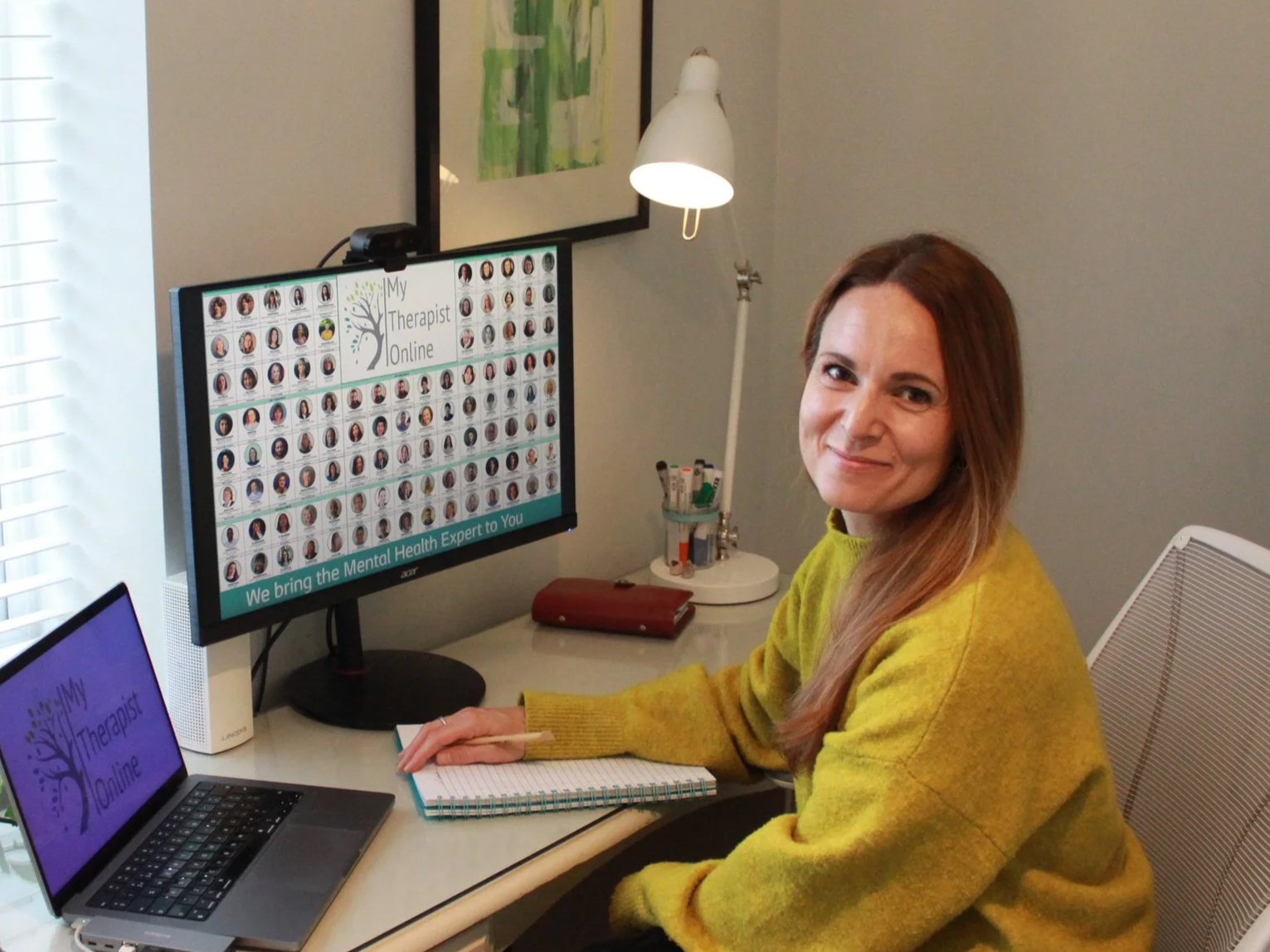
Interview: My Therapist Online Founder Lisa Johnston
Can you introduce My Therapist Online and explain how this service originated?
My Therapist Online was founded by husband and wife business partners Lisa and Keith Johnston over ten years ago.
Lisa is a BABCP-accredited Cognitive Behavioural Therapist and EMDR therapist who previously worked in Mental Health services from 2003, and with her final 7 years at the National Anxiety Disorders Unit at the Maudsley Hospital in London, where she specialised in the treatment of OCD, BDD and Emetophobia. After the birth of their second child, Lisa began offering therapy online so she could continue supporting people while balancing family life.
As demand grew, it became clear that many people were struggling to find the right type of therapist locally. People often sought help near where they lived, which meant their options were limited to whoever happened to practise in the area.
Lisa and Keith created My Therapist Online to solve that problem, helping people find a therapist with the right expertise for their particular situation, regardless of location.
Today, My Therapist Online has a network of over 200 highly qualified therapists offering online therapy including Psychology, CBT, EMDR and counselling. They support individuals, couples and families of all ages with a wide range of emotional challenges including anxiety, grief, trauma, relationship difficulties and life transitions.
How does your matching process work?
My Therapist Online is still run by Lisa and Keith today.
Alongside Lisa, experienced therapists Mary Ion and Sarah Kenny help carefully review every application that comes through the service. Rather than using an automated system, each person’s situation is personally read and considered. Here is a link to our registration form.
The team looks at the type of difficulty someone is experiencing, their preferences and practical considerations such as availability. They then recommend a therapist whose skills and experience best match that person’s needs.
People are usually given a few therapist options to consider, so they can choose who feels right for them.
Lisa says “We also offer everyone a free introductory consultation with their chosen therapist. This gives people the chance to meet them, ask questions and make sure the connection feels comfortable before starting therapy.”
What makes your service different from traditional in-person therapy?
The therapy itself is exactly the same high-quality therapy you would receive in a clinic. The only difference is that sessions take place through a secure video call, such as Zoom.
This means you can speak face-to-face with your therapist through secure online therapy sessions, without needing to travel.
One of the biggest advantages is that it allows us to match people with the most suitable therapist for their needs, rather than limiting the choice to whoever happens to practise locally.
Many people find this makes a huge difference, particularly when they are looking for someone with specialist experience.
Online therapy also allows people to speak to their therapist from the comfort of their own home, which many find more relaxing and discreet.
How does mental wellbeing support healthy, independent living?
Our emotional wellbeing plays a huge role in how we experience life.
When we feel mentally well, we are far more likely to stay engaged in the things that bring meaning and enjoyment, spending time with others, pursuing hobbies, staying active and continuing to explore new opportunities.
On the other hand, anxiety, low mood or difficult life experiences can sometimes make it harder to enjoy those activities or to feel motivated.
Therapy can help people understand what they are going through, learn helpful strategies to manage difficult emotions, and reconnect with the parts of life that matter most to them.
Supporting mental wellbeing is therefore an important part of maintaining independence, confidence and quality of life at any age.
How have attitudes towards therapy and mental health changed?
In the past, therapy was often seen as something only people in serious crisis might need. There was also a stereotype of lying on a couch talking endlessly about childhood!
While understanding our past can sometimes be helpful, modern therapy is usually much more practical and focused.
Today there are many evidence-based therapies that have been carefully researched and shown to help with specific difficulties such as anxiety, trauma, sleep problems, grief or relationship challenges.
Therapy can often involve learning helpful tools to manage thoughts and emotions, improving communication in relationships, or processing difficult experiences so they no longer feel so overwhelming.
As awareness has grown, more people now see therapy as a positive and proactive step in looking after their wellbeing, just like caring for physical health.
How can therapy support grief and life transitions later in life?
Later life can bring many transitions, bereavement, retirement, changes in accommodation, health changes, family shifts, or adjusting to a new stage of life.
Even when these changes are expected, they can still bring feelings of grief, loneliness, uncertainty or loss of identity.
Therapy provides a supportive space to talk openly about these experiences and to process the emotions that come with them. Read more about therapy for grief and loss here.
A therapist can give people a confidential and non-judgemental safe space to help them make sense of what they are feeling, find ways to adjust to change, and reconnect with meaning, purpose and relationships as life continues to evolve.
If you are looking for a therapist who understands your situation and preferences, My Therapist Online offers a personalised matching service connecting you with experienced psychologists, CBT therapists and counsellors across the UK.
Start by completing our short online therapist matching form and we will help you find the right therapist for your needs.
What are some signs that someone might benefit from therapy?
People often consider therapy when they begin to notice changes in how they feel, think, or cope with everyday life. Sometimes these changes can be quite subtle at first.
Signs Someone Might Benefit from Therapy
You might notice:
Feeling more anxious, low, or overwhelmed than usual
Becoming unexpectedly tearful or more emotionally sensitive
Struggling with sleep, or finding your mind constantly worrying
Losing interest in activities you previously enjoyed
Feeling lonely, disconnected, or lacking motivation
Finding yourself dwelling on past events or regrets
Feeling stuck in certain patterns in relationships or family dynamics
Adjusting to life changes such as retirement, bereavement, health changes, or moving home
Simply wishing for a safe and confidential space to talk openly about how you’re feeling
You don’t need to wait until things feel unbearable to seek support. Many people find therapy helpful simply for gaining perspective, understanding their feelings more clearly, and learning ways to navigate life’s challenges with greater ease.
Is therapy only for people in crisis?
Not at all. In fact, we often encourage people to seek support before things reach a crisis point.
Many people come to therapy simply because they want to understand themselves better, navigate a life change, improve relationships, or develop new ways of coping with everyday stresses.
Once you have connected with a therapist you feel comfortable with, it can become a supportive relationship you return to when needed, sometimes during a difficult period, and sometimes simply for reflection and guidance.
In much the same way we might see a physiotherapist to look after our physical health, therapy can help us maintain and strengthen our emotional wellbeing.
You don’t have to wait until things feel overwhelming to benefit from that support.
What would you say to someone considering therapy for the first time?
It’s completely normal to feel a little uncertain about starting therapy.
A good therapist will move at a pace that feels comfortable for you and will work collaboratively with you. There is no pressure to share anything before you feel ready.
Many people say that once they take the first step, they feel a real sense of relief simply from having a space where they can speak openly and be listened to without judgement.
It’s also important to remember that therapy should feel like a good fit. If it doesn’t feel helpful, you can always pause or try working with a different therapist. Finding the right person to talk to can make all the difference.
Can online therapy work for older adults?
Yes, absolutely. Having run My Therapist Online for over ten years, I can confidently say this. Research increasingly shows that online therapy can be just as effective for older adults as it is for younger people.
Many evidence-based therapies, including Cognitive Behavioural Therapy (CBT) and counselling, can be delivered very successfully through secure video sessions.
This means people can receive the same high-quality therapy they would expect in a clinic while speaking with a therapist face-to-face online.
Guidance from organisations such as the National Institute for Health and Care Excellence (NICE) shows that psychological therapies remain effective for people later in life.
For many people, online therapy can actually make accessing support easier. Speaking with a therapist from home removes the need to travel and allows people to connect with a specialist therapist regardless of where they live.
It also provides greater choice. Rather than being limited to therapists practising locally, online therapy allows people to find someone with the right experience for their particular situation.
Many people find that sessions quickly feel natural and comfortable. Being able to talk openly from the privacy of home can make it easier to take that first step and begin a supportive conversation.
What is one myth you’d like to dispel about therapy?
A common myth is that going to therapy means there is something “wrong” with you.
In reality, we are all navigating life using the tools and experiences we have. Therapy simply provides a space to gain new perspectives and develop helpful ways of managing life’s (often complex) ups and downs.
Speaking with a skilled therapist can help you make sense of life’s challenges, whether that’s navigating relationships, coping with loss, adjusting to change, or managing stress.
Seeking support is not a sign of weakness. In many ways, it’s a sign of strength and a positive step towards taking care of yourself and your wellbeing.
What does “good mental health” look like to you?
Good mental health doesn’t mean feeling happy all the time.
Rather, it’s about being able to experience the full range of emotions that come with life, while still feeling able to cope, stay connected with others, and find meaning in everyday life.
When our mental health is in a good place, it often shows up in practical ways too. We tend to sleep better, have more energy, and feel clearer about the choices we are making in life. We are more likely to spend time on the things that matter to us and live in ways that feel aligned with our values.
At its heart, good mental health is about resilience, the ability to adapt, recover from challenges, and continue moving forward with a sense of purpose.
If there’s one takeaway you’d like Pegasus residents to remember, what would it be?
You do not have to face emotional challenges alone.
Support is available at every stage of life, and it is never too late to talk to someone who understands and can help.
Sometimes the smallest step, simply starting a conversation, can open the door to positive and meaningful change.
Therapy in Later Life: Research and Reassuring Facts
Emotional challenges are not uncommon in later life. In fact, Age UK estimates that around 1 in 5 adults over 65 in the UK experience symptoms of depression at some point.
The encouraging news is that therapy can be very effective at any age. Research cited in NICE guidelines shows that psychological therapies, including Cognitive Behavioural Therapy (CBT), are just as effective for older adults as they are for younger people.
NHS Talking Therapies data also shows that thousands of people aged 65 and over access therapy each year, with recovery rates comparable to those seen in other age groups.
Increasingly, many people are choosing to access therapy from the comfort of their own home through online sessions. It’s often something people do quietly and privately, you may not hear about it from friends or neighbours, but it is happening more than ever.
More and more people are discovering the benefits of having convenient, accessible support when they need it. If you’ve ever wondered whether therapy might help, you certainly wouldn’t be alone in taking that step.

Lisa Johnston
Clinical director & Co Founder of My Therapist Online - UK